
Introduction
Historically, dermatologic educational materials, skincare advertisements, and public media resources have disproportionately depicted lighter skin tones over darker skin tones. Textbooks underrepresent dark skin in medical images despite often having an overall proportional race representation, with only 4.5% of textbook images representing dark skin tone.1 Google image search results also reflect this disparity in skin tone diversity; images depicting dermatologic conditions on dark skin only make up 5.7% of the total 3700 photographs evaluated.2 Underrepresentation of dark skin tones can also be observed in national meetings and photographs in the U.S.3 However, this underrepresentation is present globally, as literature reviews have determined that publications relevant to skin of color are lacking, with higher-ranking journals publishing fewer SoC-related articles.4
Although rising numbers of publications show promise of increasing diversity within the pool of dermatology professionals, historical and structural barriers still remain.5 Early racial origins of dermatology cannot be ignored, and the problematic history with venereal disease study is reflected in the overrepresentation of images of sexually transmitted disease in dark skin compared to light skin.6 Clinical trials have historically overrepresented white/lighter skin tones and lack skin color diversity, with studies showing that Black/African Americans were the most underrepresented in dermatology trials even when accounting for prevalence rates.7 The dearth of skin of color inclusion and diverse skin color in dermatologic clinical trials reinforces structural racism and could limit the applicability of products and treatments tested.8 This could impede innovation and progress, and serves as a structural barrier for skin tone inclusion in dermatology.
Current medical publications continue to reflect this disparity in skin tone representation, which is exemplified in the medical response to the recent COVID-19 pandemic. Although communities of color were disproportionately more affected by COVID-19, studies relevant to COVID-19 skin manifestations have largely underrepresented dark skin.9 A systematic literature review in 2020 of COVID-19 skin manifestation research found no clinical images representing Fitzpatrick type V or VI skin despite over 1 million confirmed cases of COVID-19 globally and the high incidence of the disease among the Black American population.10 This is a significant contemporary instance of exclusion and underrepresentation of darker skin tones in dermatology and demonstrates the ongoing need for increased skin tone representation and diversity.
Given the underrepresentation of darker skin tones in dermatologic educational materials and skincare advertising, it is important to examine whether individuals’ perceptions of media representation are associated with their reported healthcare experiences and information-seeking practices. This study evaluated those associations in a U.S. survey sample. Because the design was cross-sectional, the findings should be interpreted as associations rather than causal effects.
Methods
Study Design and Data Source
This study was a secondary, cross-sectional analysis of previously collected, de-identified survey data examining public perceptions of skincare and dermatologic care in the United States. The original nationwide survey was described by Reddyreddy et al. in Archives of Dermatological Research in 2025.11 This manuscript was prepared in accordance with the Strengthening the Reporting of Observational Studies in Epidemiology (STROBE) reporting guidelines for cross-sectional studies.12 The present study addresses a distinct research question, focusing on associations between perceived skin tone representation in dermatologic media, experiences with dermatologic care, and online skincare information-seeking behaviors. Following the original publication, the investigators deposited the de-identified dataset in Synapse, a publicly accessible research data repository (https://www.synapse.org/Synapse:syn64465833/datasets). The survey instrument is also available through Synapse (https://doi.org/10.7303/syn64465853). The current investigators accessed the publicly available dataset for secondary analysis. No new surveys were administered, no additional participants were recruited, and no direct contact with respondents occurred.
Original Survey Administration and Participants
The original survey was administered electronically through Prodege (Prodege, LLC, El Segundo, CA, USA),13 a commercial survey research platform that recruits participants through an opt-in process. Individuals voluntarily enrolled in the survey platform and elected to participate in available surveys, with participation occurring under the platform’s opt-in consent procedures. Survey responses were collected electronically from participants in the United States.
The original investigators requested approximately 200 completed survey responses. The survey provider obtained 205 responses and delivered the resulting dataset to the research team in de-identified form. No personally identifying information was included in the dataset provided to the researchers.
The present secondary analysis used the 205 survey records available in the publicly accessible dataset. The sample size was therefore determined by the number of responses collected for the original study, rather than by a separate sample size calculation for the present analysis. Because recruitment was conducted through an opt-in survey platform, the sample was not assumed to be a probability-based or nationally representative sample of the U.S. population.
Survey Instrument and Study Variables
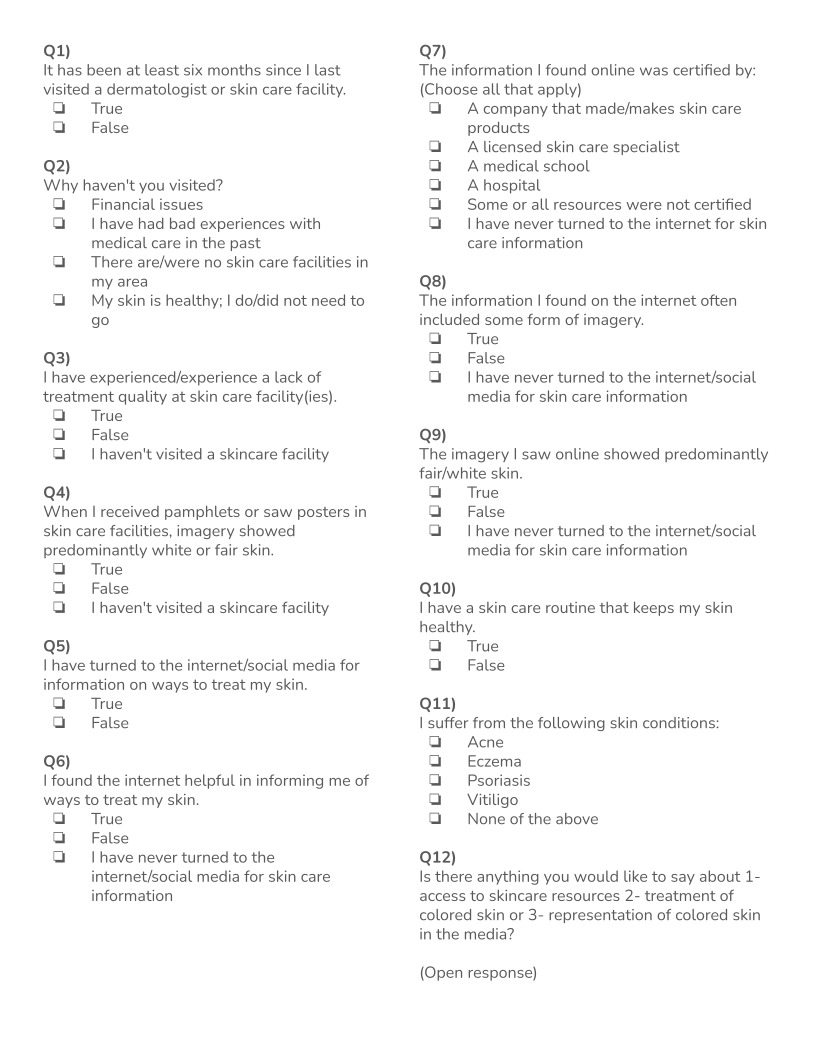
The original 12-item survey assessed respondents’ dermatologic care experiences, perceptions of skin tone representation in dermatologic educational and promotional materials, and use of online sources for skincare information. Questions addressed recent dermatologic care utilization, perceived treatment quality, representation of skin tones in printed and online dermatologic imagery, sources of skincare information, and respondents’ experiences with skin conditions. An optional open-ended question invited comments regarding access to skincare resources, treatment of people of color, and representation in dermatologic media (Figure 1).
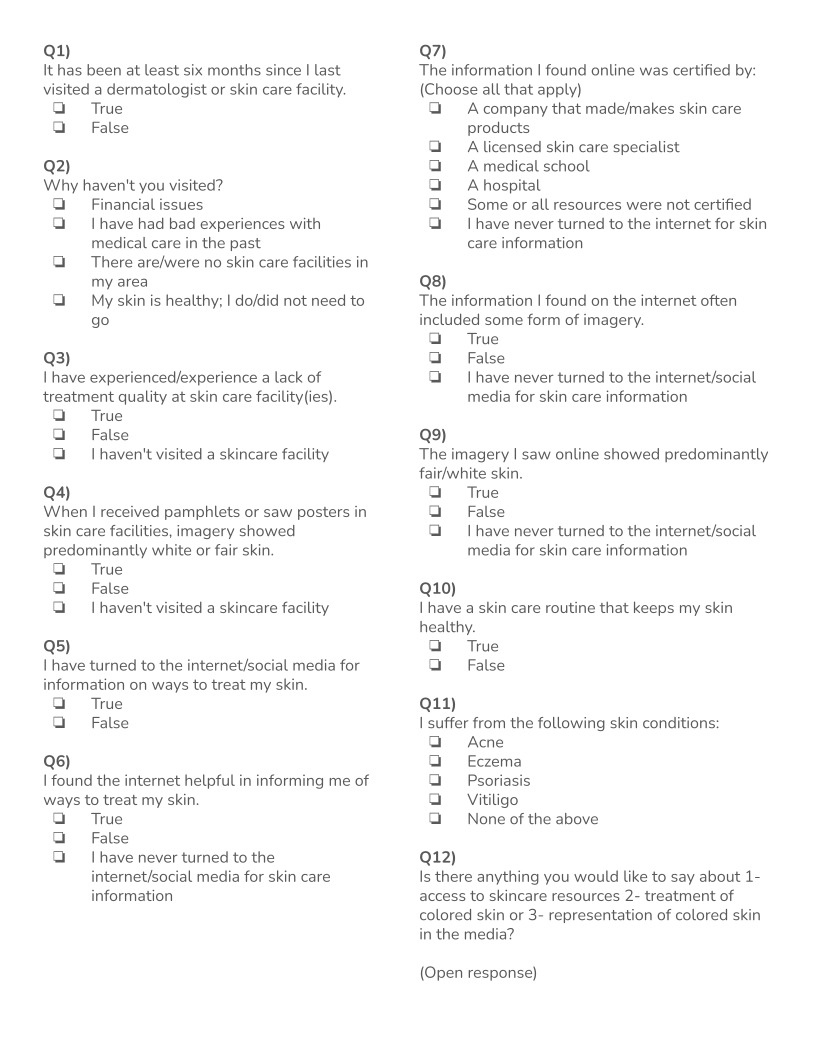
Demographic information available in the source dataset included age, sex, race/ethnicity, education, and household income.
The primary exposure of interest for the present analysis was perceived predominance of White or fair skin imagery in online dermatologic media, assessed through the corresponding survey question. Outcomes of interest included self-reported dermatologic care utilization, dissatisfaction with treatment experiences, and use of internet or social media sources for skincare information.
Categorical responses were analyzed according to the original survey response options.
Statistical Analysis
Categorical variables were summarized using frequencies and percentages. Associations between perceived predominance of White/fair skin imagery and healthcare-related outcomes were initially evaluated using Pearson’s chi-square tests.
Separate multivariable logistic regression models were constructed to examine associations between perceived predominantly White/fair imagery and each of three outcomes: dermatologic care utilization, treatment dissatisfaction, and use of internet or social media for skincare information. Models were adjusted for age and gender. Results were expressed as adjusted odds ratios (aORs) with corresponding 95% confidence intervals (CIs).
Statistical significance was defined as a two-sided p-value less than 0.05. JMP 19.0 for the Mac was used for regression models.
Qualitative Analysis
Free-text responses to the optional open-ended survey question were examined using qualitative thematic analysis. Two investigators independently reviewed the responses and identified recurring themes related to healthcare access, perceived inclusivity, experiences with dermatologic care, and skin tone representation. Differences in coding were resolved through discussion and consensus.
Responses could be assigned to more than one thematic category when multiple concepts were expressed. Accordingly, frequencies of coded themes were distinguished from the number of individual survey respondents.
Ethical Considerations
The original survey was administered through the survey provider’s voluntary, opt-in participation process. The dataset supplied to the original investigators was de-identified and was subsequently made publicly available through Synapse.
The present study involved secondary analysis of existing, publicly accessible, de-identified data. The investigators did not recruit or interact with participants, did not obtain identifying information, and did not attempt to re-identify individual respondents.
Results
The survey respondents consisted of 205 adults, of which 54% were female. The median age was 39 years, interquartile range 32-49, and range 18-82 years. Fifty-two percent were married or living with their partner. Forty-five percent had no children, 15% had one, 24% had two, and 14% had three or more. Thirty-seven percent finished high school, 13% vocational school, 29% university, and 19% postgraduate education. The majority (52%) worked for wages. Nine percent were unemployed, 6% were homemakers, 7% were retired, 9% were self-employed, 6% were students. In terms of race, 67% were white, 11% were Black, 4% were Asian, and the remainder were mixed race or preferred not to say. Respondents’ annual income levels were categorized as follows: less than 25K- 7%; between 25-50K- 14%; between 50-75K- 22%; between 75-100k-20%; between 100-125k- 6%; between 125-150K- 5%; greater than 150K- 7%. A large percentage suffered from either acne or eczema.
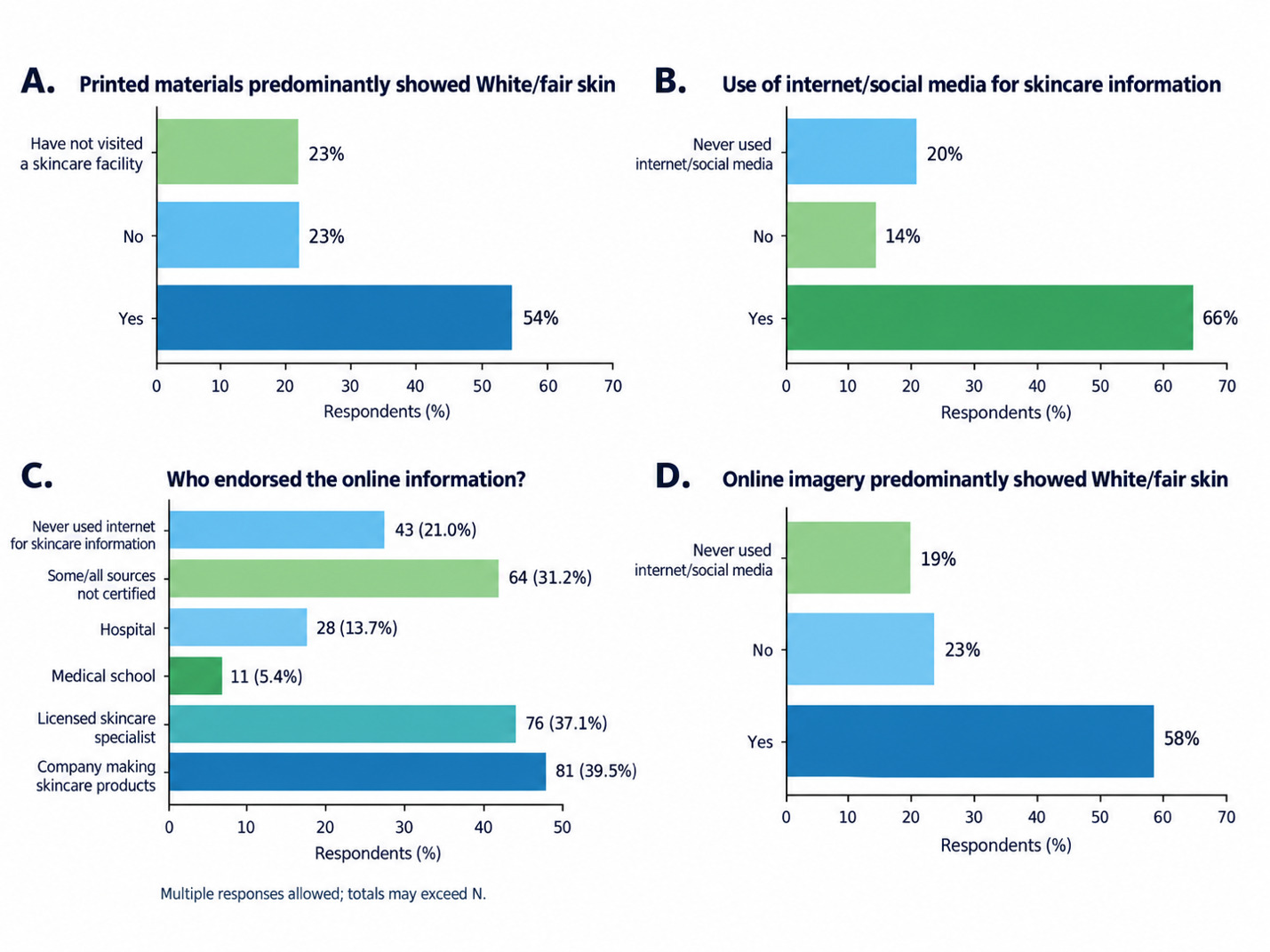
More than 70% stated they had not seen a dermatologist in 6 months or more, and this was mostly due to either healthy skin at baseline (42) or due to financial issues (35%), as reported previously. Other notable results include lack of access- as 11% reported there were no skin care facilities in their area; 35% had financial limitations and 11% had previous bad experiences, accounting for 58% who could not seek dermatology care. Fifty-four percent of respondents stated that skincare printed advertisement materials showed imagery that was predominantly fair or white skin. Figure 2 summarizes respondents’ answers on dermatologic media representation.
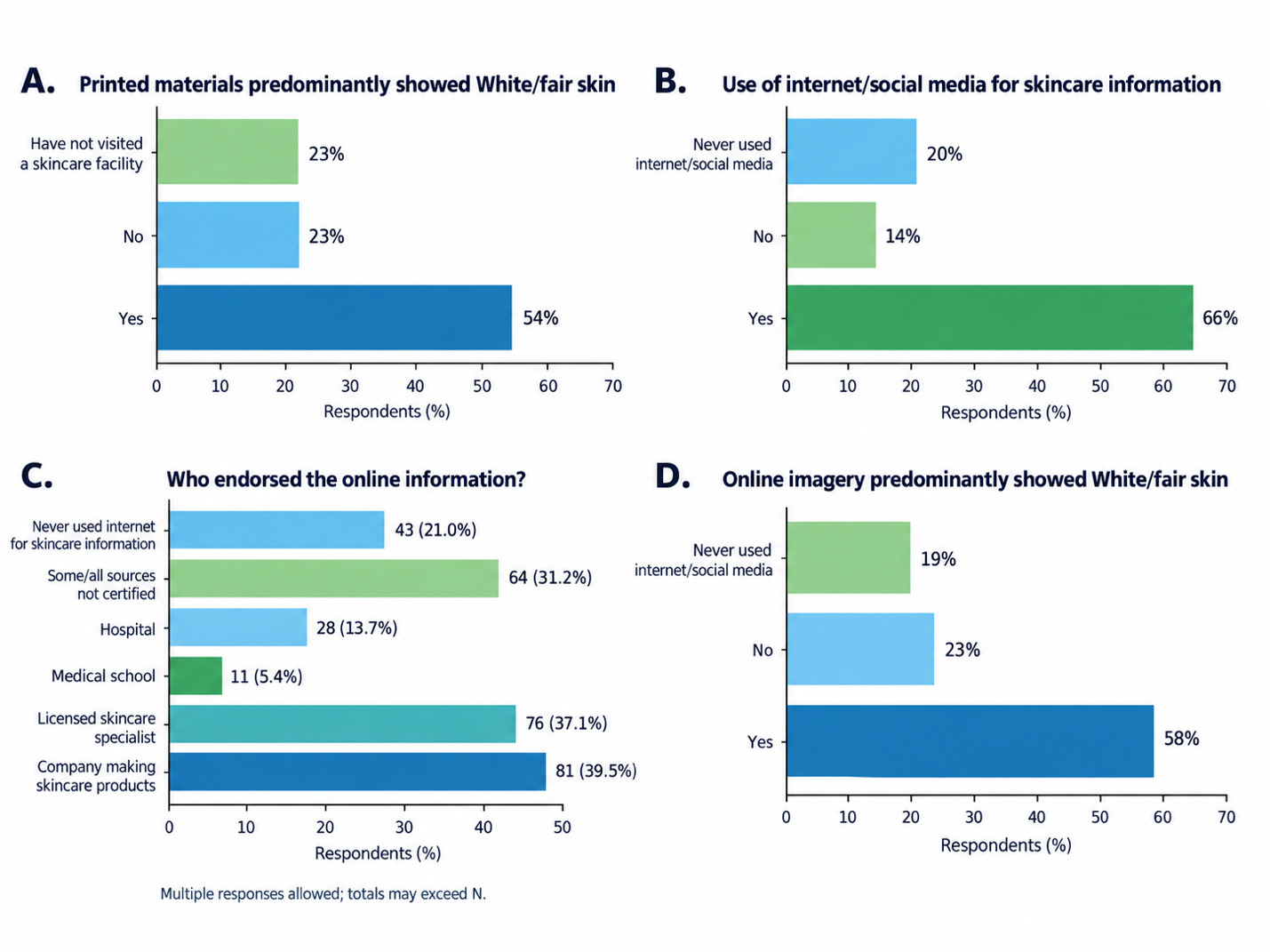
This lack of skin color diversity in printed materials may be the reason why 2/3 of the respondents turned to social media for information on skin care, even when this information was rarely endorsed by a licensed skin care specialist. Interestingly, the imagery shown online was still predominantly that of white or fair skin, with 58% of respondents confirming this.
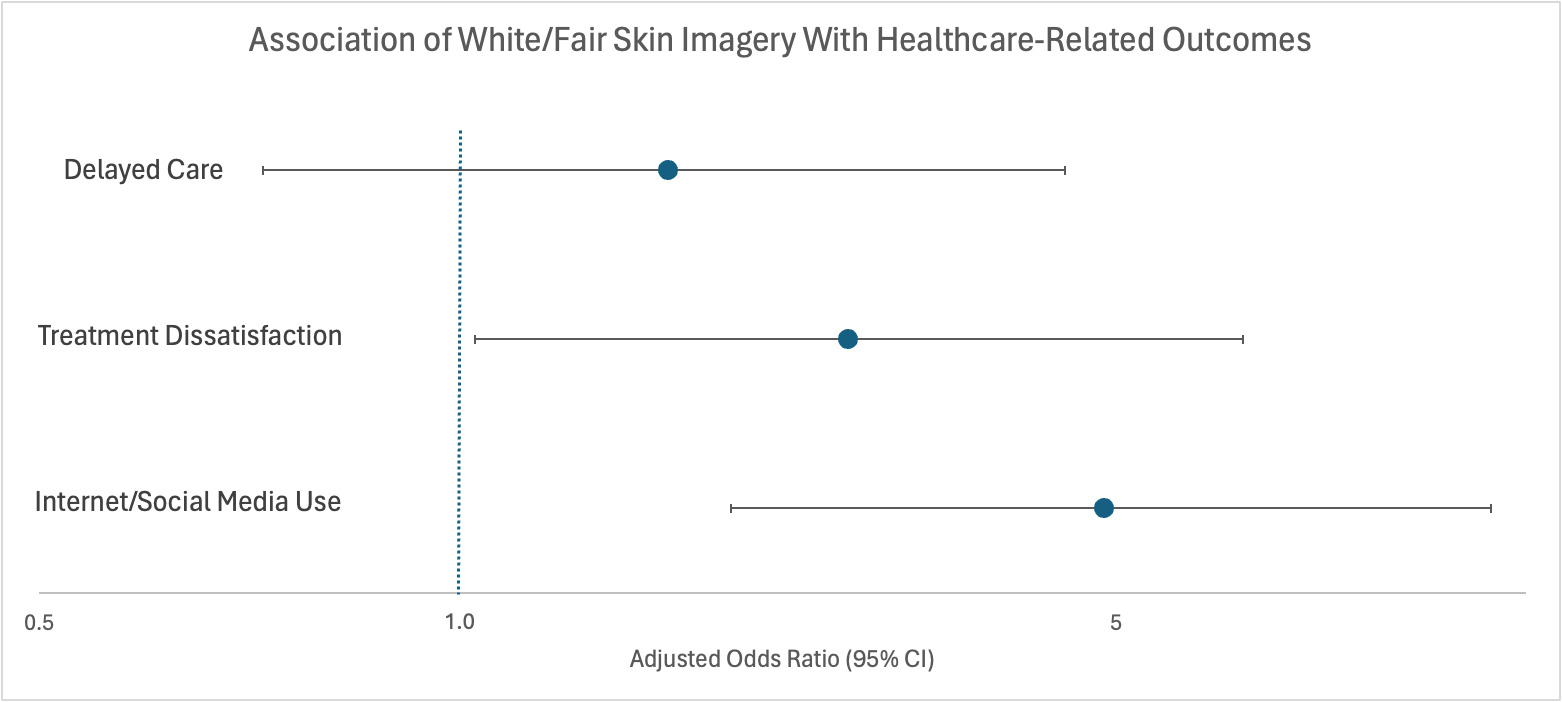
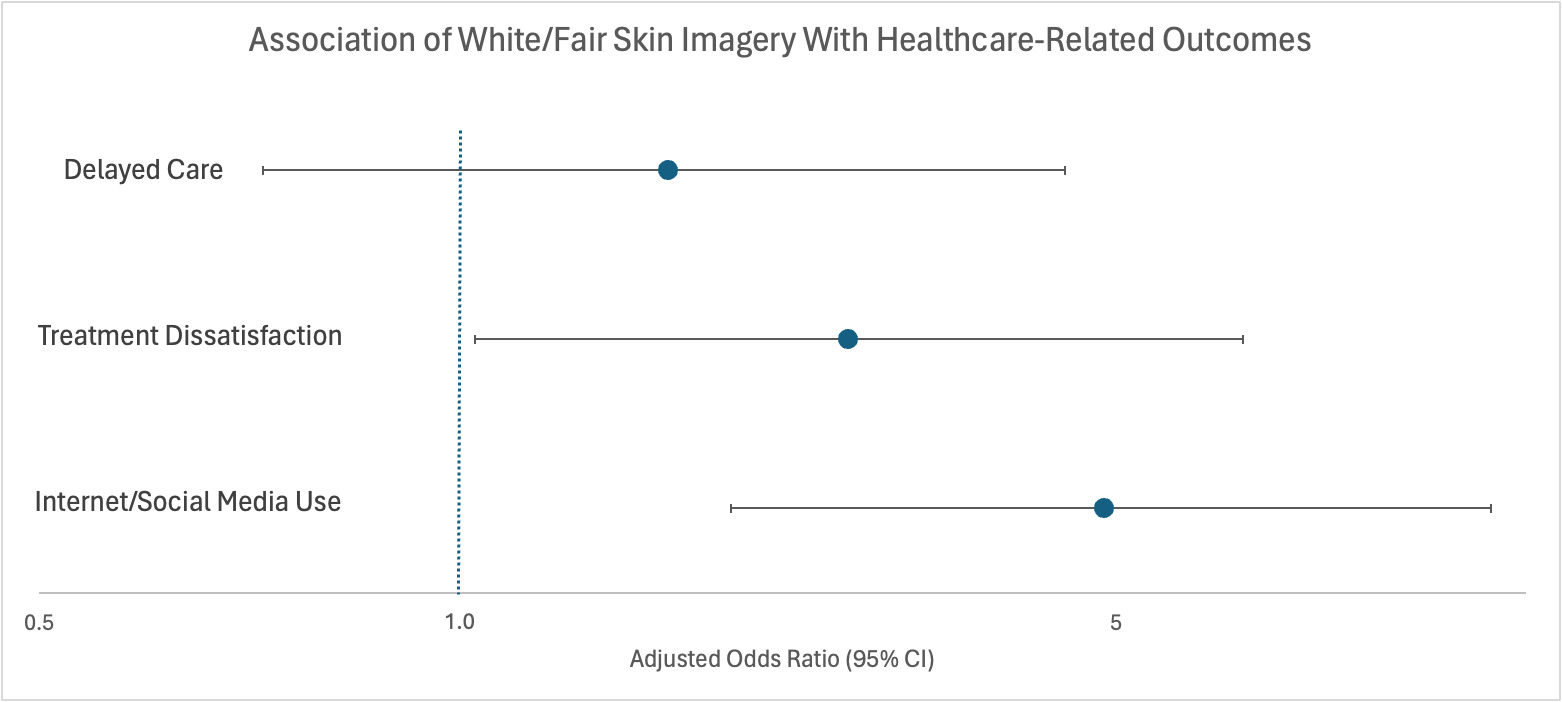
In regression models adjusted for age and gender, perceiving predominantly White/fair imagery was associated with higher odds of treatment dissatisfaction (aOR, 2.82; 95% CI, 1.27–6.56; p = 0.011) and reliance on social media for skincare information (aOR, 4.87; 95% CI, 2.19–11.15; p < 0.0001). The association with delayed dermatologic care was not statistically significant (aOR, 1.92; 95% CI, 0.81–4.48; p = 0.139). These findings are observational associations and do not establish temporal or causal relationships [table 1].
In unadjusted chi-square analyses, perceived predominantly White/fair imagery was associated with treatment dissatisfaction (χ2[1] = 8.00; p = 0.0047) and internet/social media use for skincare information (χ2[1] = 17.13; p < 0.0001). The association with delayed dermatologic care was not statistically significant (χ2[1] = 1.483; p = 0.2234) The coded open-ended material included lack of access (36 codes), lack of representation (34), poor treatment of people of color (1), unhappiness with the healthcare system (7), and full satisfaction/no response/not applicable (134) [table 2].
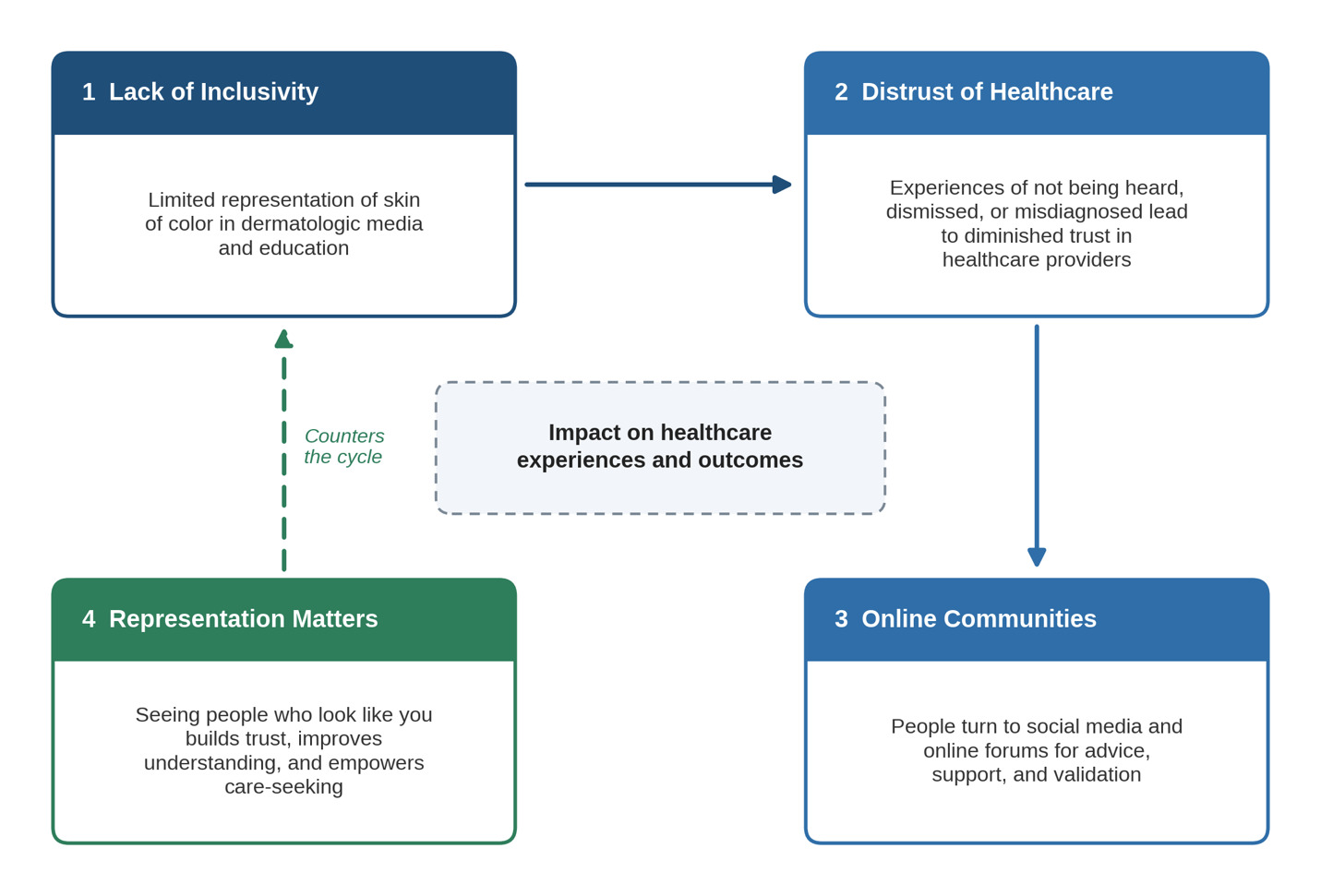
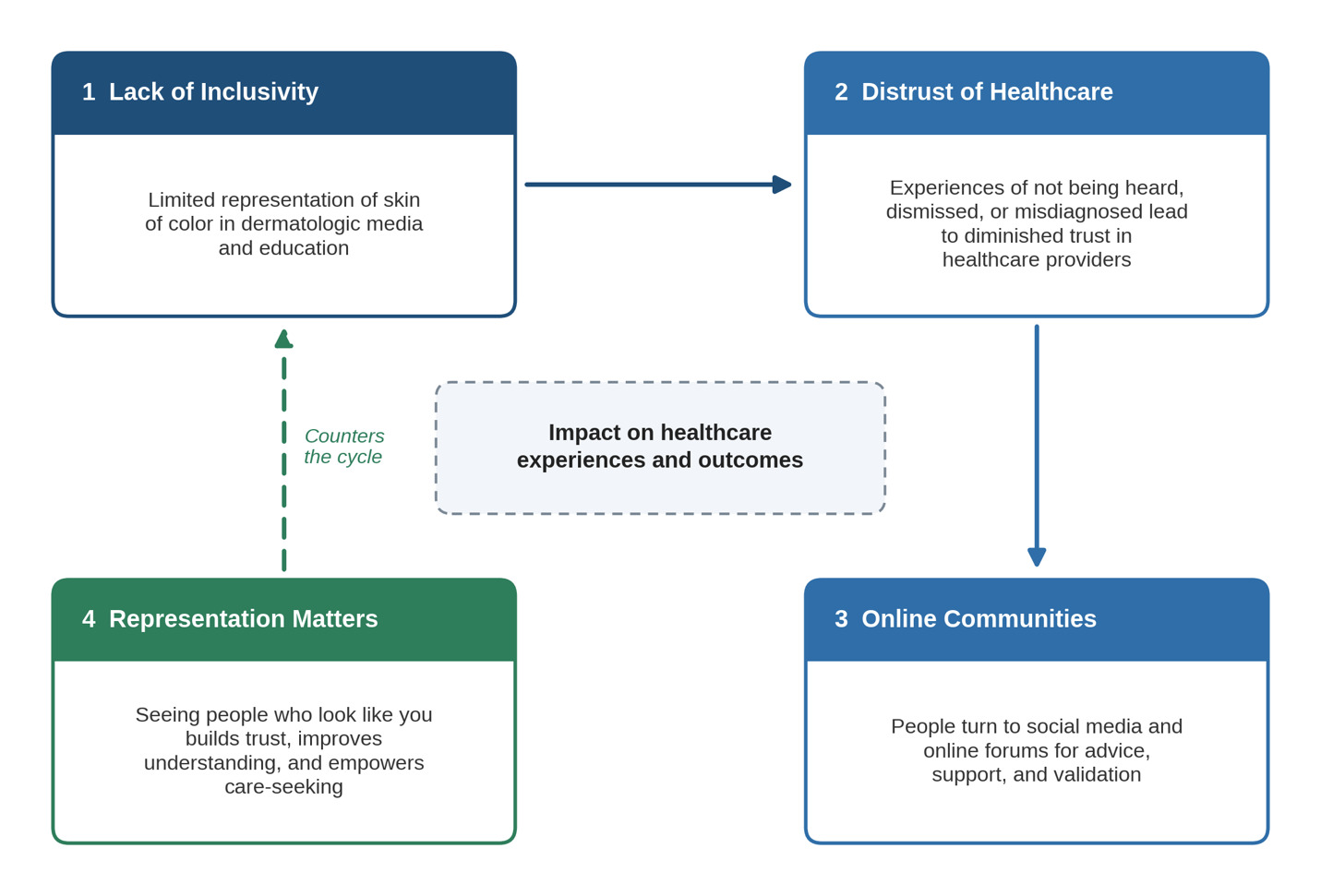
The thematic concept map summarizes recurring ideas in the open-ended comments, including inclusion, perceptions of healthcare, online communities, and representation. The diagram illustrates possible relationships proposed by the investigators; it does not establish that underrepresentation causes distrust or that more diverse imagery improves outcomes [figure 4].
Discussion
Perceived predominance of White/fair imagery was associated with treatment dissatisfaction and use of social media for skincare information after adjustment for age and gender (Figure 3). Respondents reporting predominantly White/fair imagery had 2.82 times the adjusted odds of reporting treatment dissatisfaction and 4.87 times the adjusted odds of reliance on social media for skincare information. Unadjusted chi-square tests showed a similar pattern (Table 2). These findings suggest that perceived representation and healthcare-related experiences may be related, but they do not demonstrate that representation changes behavior.
Open-ended comments raised issues related to inclusion, dissatisfaction with care, and use of online communities (Figure 4). Such themes may help explain why representation matters to respondents, although the survey design cannot establish a sequential pathway from media exposure to mistrust and social media use. Information available on social media varies in quality, and misleading dermatologic advice can pose risks.14 Future studies should distinguish reliable online resources from unsupported claims.
Perceived predominance of White/fair imagery was not significantly associated with delayed dermatologic care in the adjusted model (aOR, 1.92; 95% CI, 0.81–4.48; p = 0.139) or the unadjusted analysis. The wide confidence interval is consistent with substantial uncertainty about the effect size. Larger and more representative studies may help clarify whether an association exists.
Limited diversity in dermatologic teaching images may contribute to gaps in clinical recognition of conditions across skin tones.15 The current study, however, did not directly measure diagnostic accuracy, clinical mistreatment, healthcare trust with a validated scale, or downstream health outcomes. Prior literature describes relationships among misinformation exposure, medical mistrust, and experiences of misdiagnosis.16–19 Reports of melanoma outcomes by racial group further underscore the importance of equitable dermatologic care, although such disparities cannot be attributed to image representation alone.20
Representation in skincare media also may influence experiences beyond the clinical setting. In an experimental study among South Asian women in the United Kingdom, exposure to advertisements featuring models of different skin shades was associated with body-image and well-being outcomes.21 Artificial intelligence approaches to dermatologic diagnosis also face challenges when training datasets insufficiently reflect a range of skin tones.22,23 These findings provide context for improving image diversity but were not measured in the present survey.
Increasing the diversity of dermatologic educational imagery is a reasonable educational objective. Prior curricular work suggests that exposure to images of skin of color may improve learner comfort in recognizing dermatologic conditions.24 Whether improved media representation leads to changes in patient trust, information-seeking, or clinical outcomes requires prospective investigation.
Limitations
This study has several limitations. Its cross-sectional, self-reported design precludes causal inference and is susceptible to recall, selection, and response biases. Perceived representation was not independently evaluated against a content audit. Although the regression models adjusted for age and gender, potentially relevant confounders such as race/ethnicity, education, income, insurance, and prior dermatologic experiences were not included. Some outcome categories may have had small sample sizes, contributing to imprecise estimates. The survey did not establish the quality of online skincare sources or measure healthcare trust using a validated instrument.
Conclusion
In this cross-sectional sample, respondents who perceived predominantly White/fair imagery in online dermatologic media had higher adjusted odds of treatment dissatisfaction and reliance on social media for skincare information. The association with delayed care was not statistically significant. The findings support further study of skin tone representation in dermatologic education and media, but do not establish a causal effect on healthcare trust or clinical outcomes.
Supplementary File 1: Completed STROBE Checklist for Cross-Sectional Studies (PDF).
Ethics Approval and Consent to Participate
This study involves a secondary analysis of a publicly available, fully de-identified dataset (Synapse ID: syn64465833). As non-identifiable secondary data analysis, this study does not constitute human subjects research under United States Federal Common Rule regulations (45 CFR 46) and was exempt from Institutional Review Board (IRB) review. The original source survey was conducted voluntarily with informed consent obtained from all respondents prior to data collection. All procedures adhered to the ethical principles of the Declaration of Helsinki.
Consent for Publication
Not applicable. The manuscript contains no individual person’s data, images, or identifiable details.
Data Availability Statement
The dataset analyzed during the current study is publicly available in the Synapse repository at https://www.synapse.org/Synapse:syn64465833/datasets.
Funding
This research received no specific grant from any funding agency in the public, commercial, or not-for-profit sectors.
Competing Interests
The authors declare that they have no competing financial or non-financial interests.
Authors’ contributions
Conceptualization: Enyao Zhang (Equal), Vedha Dande (Equal). Formal Analysis: Enyao Zhang (Equal), Vedha Dande (Equal). Investigation: Enyao Zhang (Equal), Vedha Dande (Equal). Writing – original draft: Enyao Zhang (Lead), Vedha Dande (Supporting). Methodology: Latha Ganti (Lead). Supervision: Latha Ganti (Lead). Writing – review & editing: Latha Ganti (Lead).
Acknowledgements
None.